Technical Committee Chair (In no particular order)
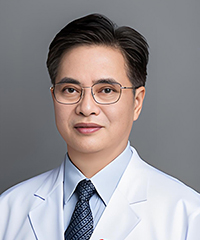
Liwu Fu
Sun Yat-sen University Cancer Center, China.
Research field: Anticancer Drug Pharmacology, Toxicology, Molecular Mechanism Of Anticancer Drugs And Individual Cancer Chemotherapy.
Dr. Liwu Fu, Professor, Director, Department of Experimental Research (Cancer Institute), Cancer Center, Sun Yat-sen University, Guangzhou, China. He received his Ph. D. degree from Sun Yat-sen University in 1996. And then he became an assistant professor, associated professor and full professor in Cancer Center, Sun Yat-sen University. He also stayed in Medical University of South Carolina as postdoctoral fellowship from 1999 to 2001. His active research fields include (1) reversal multidrug resistance induced by ABC transporters, (2) new drug research and development for treatment of cancer patients, (3) primary cancer tissue culture and test of drug sensitivity for personalized chemotherapy. He got a lot of research foundations from 863 projects (PI and Co-PI), 973 project (Co-PI), National Natural Scientific Foundations of China, and so on. He published more than 250 papers including Nature Communication, Cancer Res, Inter J Cancer, Cell Cycle, Mol Med, Mol Cancer Ther, Mol Pharm, Mol Pharmacol, Br J Pharmacol, Biochem Pharmacol etc. journals. He applied for 12 patents. He is Chairman of Board of Directors, Guangdong Anticancer Society; Associate Director, Cancer Pharmacology and Chemotherapy Section, Chinese Pharmacological Society; Associate Director, Anticancer Drug Section, Chinese Anticancer Society; Active Member of AACR; Member of Board of Directors, Guangdong Pharmacological Society; Member of Chinese Pharmacological Society.
Technical Committee Member (In no particular order)
Congcong Zhou, Zhejiang University, China
Dipayan Rudra, ShanghaiTech University, China
Eleni Petsalaki, University of Crete, Greece
Fahad Hassan Shah, Kyung Hee University, Korea
Farid Menaa, CIC-Fluorotronics, Inc., USA
Feng He, Shanghai University of Traditional Chinese Medicine, China
Ghulam Abbas, University of Nizwa, Oman
Grinenko Tatyana, Shanghai Jiao Tong University, China
Heba M. Afify, Cairo University, Egypt
Hua Su, Fudan Univeristy, China
James L Cox, A.T. Still University, USA
Jinbin Xu, Washington University, USA
Jones Gyamfi, Teesside University, UK
Kai Zhang, Shanghai Jiao Tong University, China
Lanzhen Zhang, Beijing University of Chinese Medicine, China
Luca Roncati, Link Campus University, Italy
Ming Chen, Zhejiang University, China
Ming-Ling Chang, Chang Gung Memorial Hospital, China
Mohana Kumara Patel, University of Horticultural Sciences, Indian
Mohanad S AL-Musaylh, Southern Technical University, Iraq
Mokhnache Mohamed, Ferhat ABBAS University, Algeria
Muhammad Asif Ali, University of Veterinary and Animal Sciences, Pakistan
Muhammad Hanif Ramlee, Universiti Teknologi Malaysia, Malaysia
Omkar Singh Kushwaha, Indian Institute of Technology, Indian
Peng Yuan, Cancer Hospital Chinese Academy of Medical Sciences, China
Roberta Risoluti, Sapienza Università di Roma, Italy
Rosa Tundis, University of Calabria, Italy
Rui Qing, Shanghai Jiao Tong University, China
Santosh Kumar Mishra, S. N. D. T. Women's University, Indian
Sasidharan Sreenivasan, Universiti Sains Malaysia, Malaysia
Sreyashi Das, University of Florida, USA
Sreyashi Das, Louisiana State University, USA
Sumaira Anjum, Kinnaird College For Women University, Pakistan
Tan Xiao Jian, Tunku Abdul Rahman University of Management and Technology, Malaysia
Tao Liu, Zhengzhou University, China
Thomas J. Webster, Brown University, USA
Tingzhong Yang, Zhejiang University, China
Vivek Mittal, Ehealthsystem Healthcare Limited, India
William C. Cho, Queen Elizabeth Hospital, China
Zeliha Selamoglu, Nigde Omer Halisdemir University, Turkey
Zhenhua Li, China Medical University, China
Zhichao Dong, The First Affiliated Hospital of Dalian Medical University, China
Zhiling Yu, Hong Kong Baptist University, China
Zulqarnain Baloch, Kunming University of Science and Technology, China