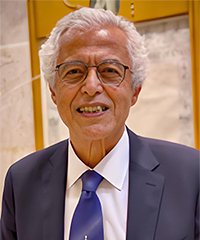
Nagy Habib
Professor, Imperial College London, UK.
Research Interests: Clinical Sciences, Oncology and Carcinogenesis, Public Health and Health Services, Paediatrics and Reproductive Medicine, Medical Biotechnology, Immunology.
More Information >>
Professor Nagy Habib is an academic surgeon and in July 2003 was awarded the position of professor of hepatobiliary surgery in the department of surgery and cancer, Faculty of Medicine, Imperial College London. He is director of the hepatopancreatobiliary (HPB) unit at Hammersmith Hospital, and in June 2007 was appointed a Pro Rector of Imperial College London and member of the College Management Board. Professor Nagy Habib pioneered the first clinical trial in the use of adenovirus for the treatment of liver cancer, as well as the use of plasmid gene therapy for hydrodynamic gene delivery. He is the first person in the West to publish a clinical trial on the use of autologous adult bone marrow-derived stem cells and RNA activation for the treatment of patients with liver insufficiency and liver cancer. He was selected as one of the top 10 surgeons in the UK by the Saturday Times Magazine and he was honoured to be elected to join the French Academy of Surgeons and the European Surgical Association. He held a gold award from the Advisory Committee for Clinical Excellencem, and the Winner of a Takreem Laureate award in 2012. He invented the Habib 4x liver resection device (acquired by AngioDynamics Inc 2015), and the Habib EndoHPB (won an Edison Gold award for Medical Innovation in 2020). He is the Founder of EMcision Ltd (medical device innovation), MiNA therapeutics (RNA therapeutics), Apterna (aptamer development), and Dawn Therapeutics (gene therapy). And he also elected Member of the French Académie Nationale de Chirurgie (2015). He has published more than 340 articles in scientific journals.
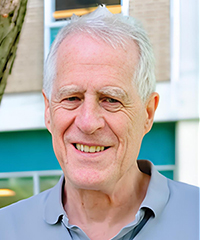
Michael Thompson
Professor, University of Toronto, Canada.
Research Interests: Bioanalytical Chemistry, Clinical Diagnostics, Drug Discovery, Nanotechnology, Molecular Imaging, Systems Biology.
More Information >>
Michael Thompson is a Professor of Bioanalytical Chemistry with the University of Toronto. He has held a number of distinguished research posts, including the Leverhulme Fellowship at Durham University and the Science Foundation Ireland E. T. S. Walton Research Fellowship at the Tyndall National Institute, Cork City. He was made a Fellow of the Royal Society of Canada in 1999. He has been awarded many prestigious international prizes for his research, including the Robert Boyle Gold Medal of the Royal Society of Chemistry, the E. W. R. Steacie Award of the Chemical Society of Canada, the Theophilus Redwood Award of the Royal Society of Chemistry, and the Fisher Scientific Award in Analytical Chemistry of the Chemical Society of Canada. He has served on the Editorial Boards for a number of major international journals, including Analytical Chemistry, Analyst, Talanta, Analytica Chimica Acta, Biosensors and Bioelectronics, and Journal of Breast Cancer Research and Advancements. And He is the Editor-in-Chief of the monograph series Detection Science for the Royal Society of Chemistry, U.K. He is also the member of UK Royal Society of Chemistry, International Society for Electrochemistry, Canadian Institute for Neutron Scattering, American Chemical Society, and IEEE.
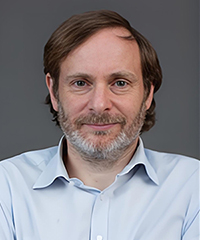
Daniel Falush
Professor, Chinese Academy of Sciences, China.
Research Interests: Microbiology, Gastric Cancer, Statistical Genetic Analysis of Coadaptation, Expanding Genomic Resources, Biomedical and Ecological Relevance.
More Information >>
Daniel Falush, PhD in Biology, is a researcher at the Shanghai Institute of Immunology and Infection, Chinese Academy of Sciences. He received his BA (Hons) from the University of Cambridge in 1992 and his PhD from University College London in 1998. He has held senior research positions at Kyushu University in Japan, the Max Planck Institute for Evolutionary Anthropology in Germany, the University of Oxford, the University of Tokyo, and the University of Bath in the UK. He has published over 80 papers in top journals such as Nature, Science, ISME, Elife, and Nature Communications, with over 30,000 citations and an h-index of 60. He has led numerous research projects, including key R&D projects of the Ministry of Science and Technology of China, the National Natural Science Foundation of China, the China National Senior Foreign Experts Program, Wellcome Trust Project Grants, and the Science Foundation of Ireland. In 2021, he was selected as one of the top 10 Chinese scholars in biology in Elsevier's "Top Global Scientists Ranking." He developed software such as Linkage model of STRUCTURE, STRUCTURE 2.2, fineSTRUCTURE, ClonalFrame, GlobeTrotter, Badmixture, ClonalOrigin, and FineRADstructure, which have been recognized in the industry and widely cited.
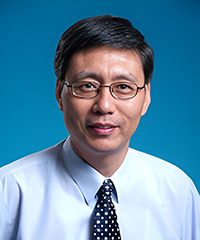
Zhiling Yu
Professor, Hong Kong Baptist University, China.
Research Interests: Pharmacology of Chinese Medicines, Anti-Cancer, Anti-Inflammation, Quality Control of Decoction Pieces.
More Information >>
Prof. Yu received his undergraduate education at the Henan University of Traditional Chinese Medicine, and obtained his PhD degree in biochemistry from the Hong Kong University of Science and Technology. Before joining the Hong Kong Baptist University, Prof. Yu once worked at China Pharmaceutical University, Nagasaki University, Hong Kong University of Science and Technology, Xiamen University and University of Macau. Prof. Yu is known for his research in herbal pharmacology, and in processing of Chinese medicinal materials. He has published more than 200 peer-reviewed research papers. Consun Pharmaceutical Group Limited and Laboratory JaneClare Limited in collaboration with Prof. Yu's team established "Consun Chinese Medicines Research Centre for Renal Diseases" and "JaneClare Transdermal TCM Therapy Laboratory", respectively, in Hong Kong Baptist University. Prof. Yu serves as Editorial Board Member/Associate Editor/Executive Editor/ Consulting Editor for more than 30 journals, such as LiShizhen Medicine and Materia Medica Research, BMC Complementary Medicine and Therapies, Current Topics in Nutraceutical Research, Journal of Alternative, Complementary & Integrative Medicine, Pharmacological Research.
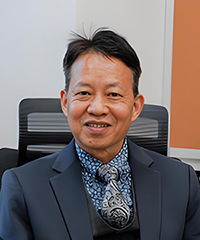
Wei Chen
Professor, XJTLU Entrepreneur College (Taicang), China.
Research Interests: Smart Chips, Sensing Technology, New Semiconductor Materials, Wearable Technology, Detection and Prevention of Diabetes and Early Cancer.
More Information >>
Dr. Wei Chen is a Fellow of the National Academy of Inventors in the United States and the Dean of the School of CHIPS at Xi’an Jiaotong-Liverpool University. He obtained his bachelor’s degree from the School of Earth Sciences at Jilin University, his master’s degree from the School of Geophysics at Central South University, and his Ph.D. from the School of Chemistry and molecular Engineering at Peking University. He previously served as the Deputy Director of the Semiconductor Materials Development Laboratory at the Chinese Academy of Sciences and received the CAS Young Scientist Award. Professor Wei Chen has long been engaged in cutting-edge nanotechnology research, and has published over 355 papers in internationally renowned academic journals such as Advanced Materials, PNAS, Nano Letters, and Signal Transduction and Targeted Therapy. His papers have been cited 22372 times so far, with an h-index of 76, and he holds 22 US patents. He was selected for the “Annual Scientific Impact” and “Lifetime Scientific Impact” lists in the “2024 Global Top 2% Scientists” ranking. Professor Chen has received the CAS Young Scientist Award, is a Fellow of the Royal Society of Chemistry, and has been honored with the Pencis Award for Excellence in Oncology and Cancer Research. In 2022, he was elected as a Fellow of the National Academy of Inventors, and in 2023, he became a Fellow of the Distinguished Scholars College at the University of Texas at Arlington, the highest honor the university bestows on faculty members. Through the efforts of Professor Chen and his team, the School of CHIPS has signed agreements with over a 30 companies and research institutes in the semiconductor field, jointly engaging in close cooperation in talent development, technological research and development, and other areas.
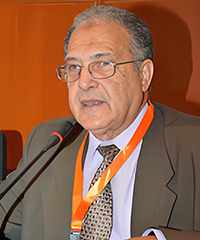
Ahmed G. Hegazi
Professor, National Research Center, Egypt.
Research Interests: Microbiology, Immunology, Natural Medicine Efficacy.
More Information >>
Ahmed Hegazi is currently a Professor of Microbiology and Immunology in the National Research Center, Egypt. Dr. Hegazi contributed Chairman of the National Committee for Microbiological Sciences (NCMS) in Egypt, Academy of Science and Technology, Egypt, from 2018, Member of specialized Scientific Councils, Academy of Scientific Research & Technology; Being a member of the Specialty Committee of Apitherapy of the World Federation of Chinese Medicine Societies (2023) and Membership of the Federation of Chinese Medicine Societies (2023). Hegazi organized and contributed to national and international research projects since 1977 and up till now; he has been the principal investigator on multiple research projects within the National Research Center. He Conducted training courses on Clinical Microbiology, National Research Center in 1979. He has 256 articles in national and international scientific journals. Editor in 48 journals, Referee in the 98 International Journals, Organizer of 196 International Symposium and conferences.
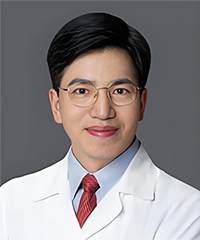
William C. Cho
Senior Researcher, Queen Elizabeth Hospital, China.
Research Interests: High-Throughput Technologies, Biomarkers for Cancer Diagnosis, Treatment Prediction and Prognosis.
More Information >>
William C. Cho is Senior Researcher at Department of Clinical Oncology, Queen Elizabeth Hospital, Hong Kong, China. He is a Chartered Scientist granted by the Science Council (UK) and a fellow member of several institutes, including the Institute of Biomedical Science (UK), Hong Kong Institute of Biomedical Science, and Hong Kong Society for Molecular Diagnostic Sciences. Besides, he is also a registered Chinese medicine practitioner. Dr Cho has published more than 600 peer-reviewed papers on international academic journal papers and dozens of books covering cancer biomarkers, proteomics, and microRNAs. He serves as the editor-in-chief, editor and associate editor of a number of international medical journals. Dr Cho is also an international renowned grant reviewer of the Hope Funds for Cancer Research (USA), Cancer Research (UK), MRC Research Grant (UK), Health Research Board (Ireland), Science Foundation (Ireland), Istituto Toscano Tumori (Firenze), The Foundation Fournier-Majoie for Innovation (Brussels), National Medical Research Council (Singapore), The Medical Research Council (South Africa), and Academia Sinica Investigator Award (Taiwan), etc. And he was recognized as a Highly Cited Researcher in 2023 by Clarivate.
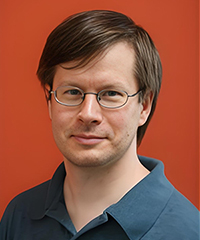
Christopher L. Antos
Associate Professor, ShanghaiTech University, China.
Research Interests: Tissue Regeneration, Immunology, Developmental Biology, Regenerative Therapy.
More Information >>
Dr. Christopher L. Antos obtained his B.S. Degrees from Indiana University in Bloomington in 1993. He then went to Freiburg, Germany on a Fulbright Scholarship and worked in the Laboratory of Dr. Rolf Kemler at the Max-Planck Institute for Immunology. In 1996, Dr. Antos started his Ph.D. work in the laboratory of Dr. Eric Olson at UT Southwestern Medical Center at Dallas. After finishing his Ph.D., he then completed his post-doctoral training in the laboratory of Dr. Christiane Nüsslein-Volhard at the Max-Planck Institute for Developmental Biology in Tübingen, Germany from 2003-2007. In 2008, Dr. Antos established his own laboratory as faculty at the DFG-Center for Regenerative Therapies Dresden of the Technische Universität Dresden. Dr. Antos joined ShanghaiTech University as an Associate Professor in Dec. 2016. Dr. Christopher has published dozends of research paper in many international academic journals.
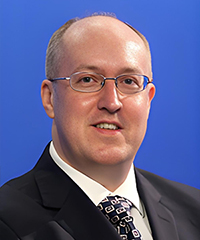
Andrew Teschendorff
Professor, Chinese Academy of Sciences, China.
Research Interests: Statistical Cancer Epigenomics, Cancer Systems Biology.
More Information >>
Teschendorff completed a B.Sc. (Honors) in Mathematical physics from the University of Edinburgh in 1995. In 1996, he obtained a distinction in the Certificate of Advanced Study in Mathematics from the University of Cambridge. Later, in 2000, he earned a Ph.D. in Theoretical particle physics from the University of Cambridge. He performed post-doctoral work at the Breast Cancer Functional Genomics Laboratory at the University of Cambridge from 2003 to 2008. Teschendorff was a member of the Research Group at British Telecom Labs from 2000 to 2001 before joining the University of Warwick as a research assistant within the Mathematical Biology Group, where he remained from 2001 to 2003. He was a senior post-doctoral fellow in Computational Biology at the University of Cambridge between 2003 and 2008. In 2008, he joined University College London where he held the positions of principal research associate in Statistical Cancer Genomics until 2013, as well as Newton Advanced Fellow from 2015 to 2018. He then joined the CAS Max-Planck Partner Institute of Computational Biology in Shanghai, where he was a professor in Computational Systems Epigenomics from 2013 to 2020. Since 2020, he has been a professor and principal investigator at CAS Key Lab of Computational Biology in Shanghai, and in 2015, was named an honorary research fellow at University College London. He has been a recipient of the Heller Research Fellowship, Cambridge-MIT fellowship, and an Advanced International Newton Fellowship from the Royal Society. In 2023, he was a recipient of a Highly Cited Researcher award from Clarivate.
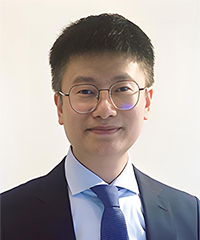
Hua Su
Researcher, Fudan University, China.
Research Interests: Tumor Microenviroment and Metabolism, Mechanism of Macropinocytosis Initiation, Functions of Collagen in Tumor Development and Tumor Immunity, Tumorigenesis and Tumor Metabolism of Desmoplastic Cancer.
More Information >>
Dr. Hua Su conducted his Ph.D. training at the Department of Biochemistry and Molecular Biology at Zhejiang University. He worked as the Postdoctoral Scholar in University of California on 2018-2022. Now, he is the Principal Investigator at Institutes of Biomedical Sciences, Fudan University, and he also is the Principal Investigator at Zhongshan-Xuhui Hospital, Fudan University. In 2022, Dr. Su established a research laboratory focus on tumor microenvironment and tumor metabolism. Dr. Su is currently the Guest Associate Editor for Frontiers in Veterinary Infectious Diseases journal, member of the American Association for Cancer Research (AACR), member of American pancreatic Association (APA) and member of American Chinese Society for Biological Sciences (SCBA). During his career, he has received many awards, including National Scholarship (2007, 2015, 2016); Roche Education Award for Excellence in Research (2017). Shanghai Leading Talent Project, 2022; National Natural Science Foundation--Outstanding Youth Project, 2022. He has published a series of papers in internationally renowned journals such as Nature, Cancer Cell, Molecular Cell, Autophagy, Nature Communications, and PNAS, revealing the relationship between macropinocytosis and classical autophagy, establishing the transcriptional regulatory mechanism of macropinocytosis, and discovering the regulatory role and mechanism of the existence of type I collagen in the occurrence and metastasis of pancreatic cancer. These findings provide new strategies for the treatment and prognosis of pancreatic cancer, and he has applied for two related US patents.
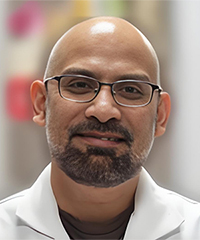
Dipayan Rudra
Associate Professor, ShanghaiTech University, China.
Research Interests: Immune Tolerance, Autoimmunity and Inflammation, Regulatory T Cells, Tumor Immunology.
More Information >>
Dipayan Rudra graduate from Albert Einstein College of Medicine with the doctor degree in 2005. Then he has been worked as Postdoctoral Fellow in University of Washington from 2006-2008, Research Fellow in Memorial Sloan Kettering Cancer Centre from 2009-2013, Principal Investigator in Academy of Immunology and Microbiology, Institute for Basic Science from 2013-2019, Research Associate Professor in Integrative Biosciences and Biotechnology (IBB), Pohang University of Science and Technology from 2019-2020, and Senior Scientist in Immunobiome Inc. from 2020-2021. Now he is the Associate Professor, Researcher, and Doctoral Supervisor in School of Life Science and Technology, ShanghaiTech University. His researches mostly focus on immune tolerance, autoimmunity and inflammation, regulatory T cells, and tumor Immunology. And he also published dozens of papers on international academic journals, and been the reviewer of many internation outstanding journals. He is the Editorial Member of Scientific Reports, and been the Guest Editor of International Reviews of Immunology.
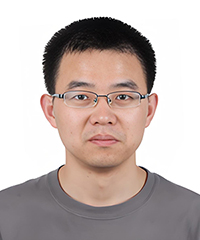
Feng He
Researcher, Shanghai University of Traditional Chinese Medicine, China.
Research Interests: Stress Response Signaling in the Regulation of Inflammation and Metabolism, and their roles in Pathogenesis of Cancer, Exploring the New Methods for Cancer Prevention, Diagnosis, and Treatment.
More Information >>
Dr. He obtained his Ph.D. degree from the University of Oklahoma Health Sciences Center, USA. He studied the Alcoholic and Non-Alcoholic Fatty Liver Disease (AFLD/NAFLD), Toxicant-Associated Fatty Liver Disease (TAFLD) and their progression into steatohepatitis, liver cirrhosis and liver cancer as well as tumor immunotherapy. Currently, his research focuses on stress response signaling in the regulation of inflammation and metabolism, and their roles in pathogenesis of cancer as well as exploring the new methods for cancer prevention, diagnosis, and treatment. Dr. He has received Lilly Innovative Fellowship Award from Eli Lilly and Joy Cappel Young Investigator Award. As a principle investigator, he undertook Eli Lilly's non-alcoholic steatohepatitis and liver cancer research fund and also participated in 5 research funds from the National Institutes of Health. Dr. He has published more than 20 research papers in journals such as Cancer Cell, J Hepatol, Proc Natl Acad Sci USA, EMBO J, J Biol Chem., Int J Mol Sci., Carcinogenesis, etc., with an average of more than 70 citations per paper. The highest impact factor of the journals, in which he is a first author or corresponding author, is 20.6.
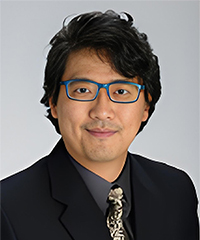
Jun Zhang
Professor, University of Kansas Medical Center, USA.
Research Interests: Microbiome, Lung Cancer, Tumors, Immunotherapy, Targeted Therapy, Resistance Mechanisms, Malignancies, Translational Trials.
More Information >>
Jun Zhang, MD, PhD, is a physician-scientist, principal investigator, and board-certified medical oncologist. Dr. Zhang earned his medical degree from Xiang-Ya School of Medicine, Central South University in China, a PhD in Cancer Biology from LSU, completed a postdoctoral research fellowship at Harvard Medical School and UCSF, and a Hematology/Oncology fellowship at Emory University School of Medicine. He has authored over 100 publications, including articles in many high-impact journals. Dr. Zhang is a member of The Royal Society of Medicine, European Society for Medical Oncology, Chinese American Hematologist and Oncologist Network, International Association for the Study of Lung Cancer, American Society of Clinical Oncology, Member, and American College of Physician. Currently, he serves as the co-Director of the Lung Cancer Program and Associate Director of the Early Phase Program at the University of Kansas Comprehensive Cancer Center (KUCC).
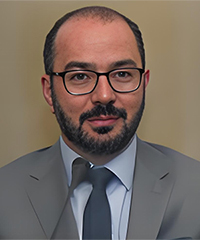
Orestis Ioannidis
Assistant Professor, Aristotle University of Thessaloniki, Greece.
Research Interests: Surgery, Nutrition, Infections, Laparoscopy, Oncology.
More Information >>
Dr. Orestis Ioannidis is an Assistant Professor of Surgery at the Medical School of Aristotle University of Thessaloniki. He earned his medical degree from the same institution in 2005. He went on to complete two master's degrees—one in Medical Research Methodology (2008) from Aristotle University, and another in Surgery of the Liver, Biliary Tree, and Pancreas (2016) from Democritus University of Thrace. In 2014, Dr. Ioannidis was awarded a PhD from Aristotle University of Thessaloniki. A practicing General Surgeon, he has a strong clinical and academic focus on laparoscopic surgery, surgical oncology, surgical infections, acute care surgery, perioperative nutrition, ERAS (Enhanced Recovery After Surgery), and vascular access. He is a fellow of several prestigious surgical societies, including EAES, ESSO, EPC, ESCP, and ACS. Dr. Ioannidis is an accomplished researcher, having authored over 180 scientific publications, accumulating more than 3,000 citations and a Google Scholar H-index of 45.
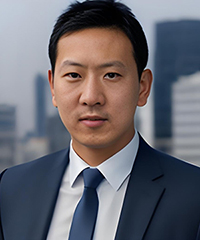
Simon Liang
Assistant Professor, University of Minnesota Twin Cities, USA.
Research Interests: Gene Therapy, Cancer Research, Liver Disease, Lung Disease, Translational Research.
More Information >>
Dr. Liang is a tenure-track assistant professor of Medicine, and his research focuses on the applications of CRISPR-mediated genome editing for gene therapy and cancer research. As a graduate student at University of Bern (Switzerland), he investigated drug resistance mechanisms in lung cancer with FGFR1 amplification and KRAS mutation using CRISPR-based knockout screens. This experience provided him with a deep understanding of how CRISPR technology can be leveraged to elucidate drug resistant mechanisms. During his postdoc training at UMASS medical school, he developed an improved prime editor (PE) capable of generating orthotopic liver cancer models and correcting E342K mutations in PiZ mice. To address safety concerns, he developed two technologies: GUIDE-tag (for SpCas9) and PE-tag (for PE). These tools enable genome-wide profiling of off-target sites in mammalian cell lines and adult mouse liver. In addition, he developed and validated a dual adeno-associated virus (AAV) CRISPR platform capable of effective editing in the mouse lung. To reduce immune responses and enable repeated dosing, he identified inhalable delivery lipids for Cas9 mRNA and sgRNA. These lipid nanoparticles efficiently mediate gene editing in lung epithelium. Dr. Liang is the Member of Masonic Cancer Center, American Association for the Study of Liver Diseases (AASLD), Center for Genome Engineering (CGE), American Association for Cancer Research (AACR), and American Society of Gene and Cell Therapy (ASGCT).